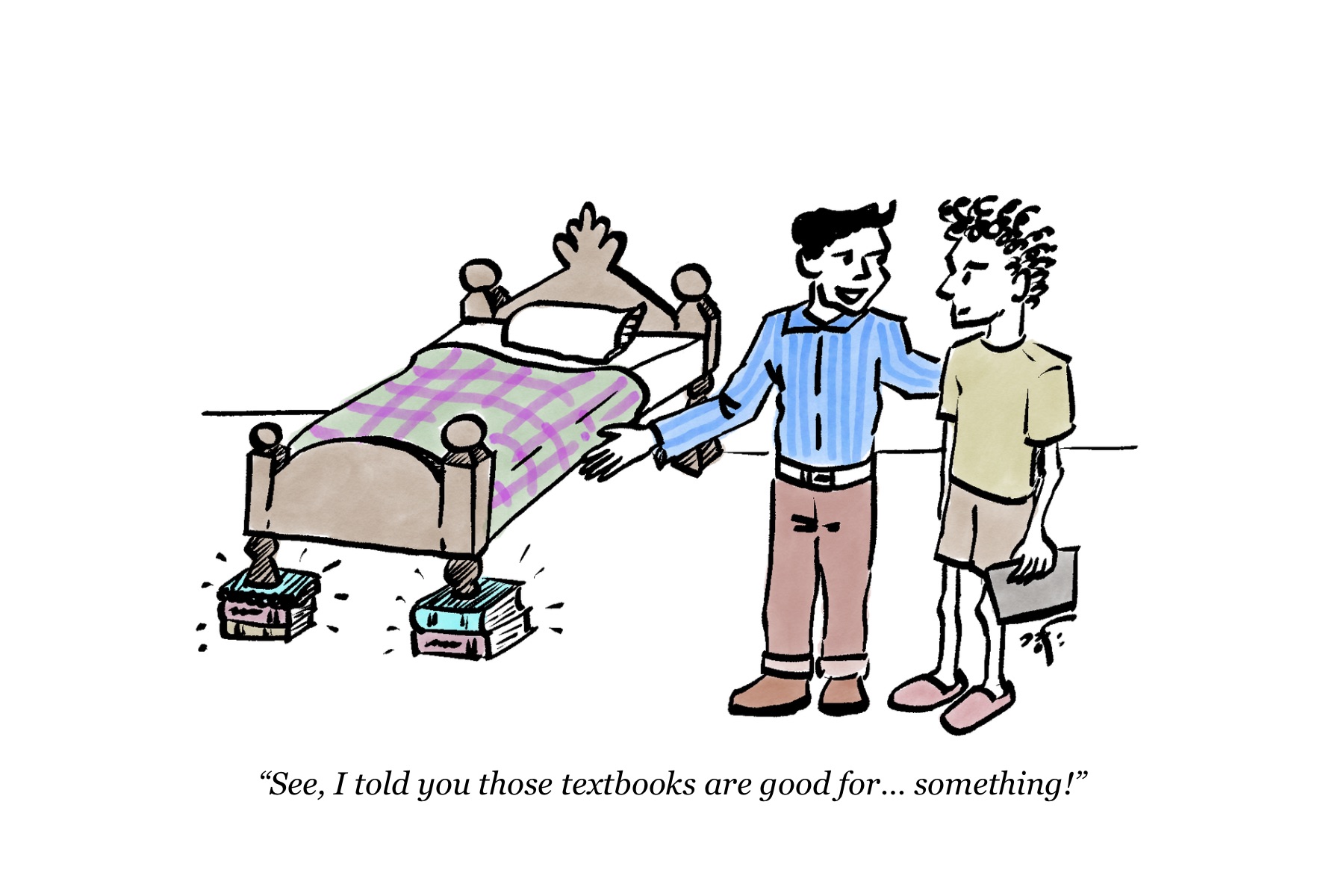
It was around the middle of my first year, during a conversation with a friend about taking a Classics GE, that I noticed some of my engineering peers react to reading and writing the way pure sodium reacts to water. Needless to say, I was taken aback by my peer’s rather violently exothermic reaction to being assigned 20 pages to read for a supposedly “useless” humanities class. As someone fresh out of an international school that heavily incentivized reading and writing, I found this unheard of. But now that I’m rapidly approaching the end of my third year, I think I know why my peer reacted that way: a lot of young engineers come into engineering school thinking that they’ll do minimal reading and writing.
Engineering does a bit of false advertising. Many of us choose it because we imagine a world of building, designing, and hands-on problem-solving. In reality, there’s a lot of reading and writing because engineering is built on communication and scholarship. I can’t count how many papers and publications I’ve had to read to write any sort of lab report or start a research project at UCLA. Some may argue that we now have large language models (LLMs), be it ChatGPT or Claude, at our fingertips and can write a prompt to summarize anything we don’t want to read. But summaries are only effective if you have the skills to evaluate them. AI tools are still inaccurate, biased, and overly agreeable with their users. So, a young engineer must have the reading comprehension skills to fact-check everything, and what better way to build these skills than by... You guessed it: reading.
I’d like to propose one simple agenda: engineers need to read. My fellow engineering peers, we need to start reading. Read novels. Read history. Read scientific papers. Read things you agree with and things you don’t. Whatever you read, keep reading. The better engineers aren’t just builders; they’re readers.